 480-710-2723

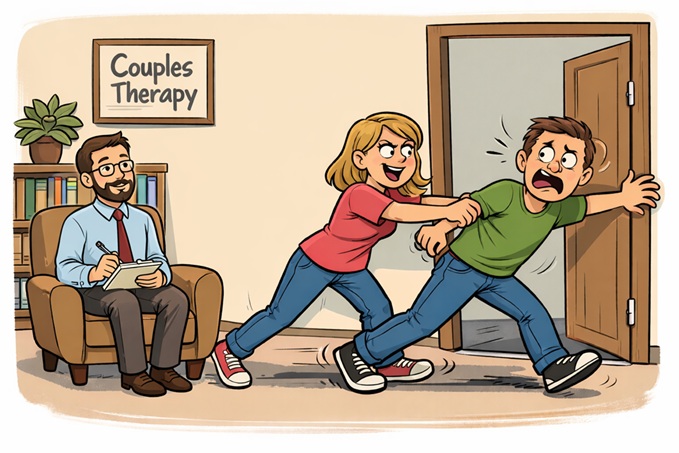
Many couples think about seeking therapy long before they actually reach out.
Often, there is a period—sometimes lasting months or even years—where one or both partners have a growing sense that:
- communication is becoming more difficult
- arguments are becoming repetitive
- emotional distance is increasing
- resentment is slowly building
At first, couples often hope things will improve naturally.
They may think:
- “We’re just stressed right now”
- “Every couple goes through rough patches”
- “Maybe things will settle down on their own”
Sometimes they do.
But often, the underlying patterns gradually become more entrenched over time.
Why Couples Often Wait Too Long
There are many understandable reasons couples delay therapy.
Some couples worry:
- therapy means the relationship is “seriously broken”
- the therapist will take sides
- bringing things up will make conflict worse
Others simply become caught in the momentum of daily life:
- work stress
- parenting
- exhaustion
- avoiding difficult conversations
Unfortunately, avoidance itself often becomes part of the relationship pattern.
Over time, couples can begin feeling increasingly:
- disconnected
- defensive
- emotionally reactive
- hopeless about change
Relationship Problems Usually Develop Gradually
In most relationships, major breakdowns do not happen suddenly.
Instead, couples often become trapped in repeating cycles that slowly erode emotional safety and connection.
Research influenced by John Gottman has identified several interaction patterns that can gradually damage relationships, including:
- criticism
- defensiveness
- withdrawal
- contempt
These patterns often develop unintentionally.
Many couples are not trying to hurt one another—they are reacting to feeling hurt, misunderstood, criticized, rejected, or emotionally overwhelmed themselves.
The Earlier Couples Seek Help, the Easier Change Often Becomes
One of the biggest misconceptions about couples therapy is:
“We should wait and see if things improve first.”
In reality, couples therapy is often most effective before resentment and emotional disconnection become deeply entrenched.
Early intervention can help couples:
- identify negative interaction patterns sooner
- improve communication before escalation becomes habitual
- rebuild emotional connection
- prevent repeated conflicts from becoming chronic
Therapy is not only for relationships that are falling apart.
It can also help reasonably healthy relationships become stronger, safer, and more connected.
Emotional Regulation Matters in Relationships
Many relationship conflicts escalate because emotions become too intense too quickly.
When people feel:
- criticized
- rejected
- ignored
- controlled
- misunderstood
their nervous systems often shift into defensive or reactive states.
This is one reason I integrate skills from Dialectical Behavior Therapy into couples therapy work.
DBT-informed skills can help couples:
- slow down escalation
- tolerate emotional discomfort more effectively
- communicate more clearly
- pause before reacting impulsively
When emotional regulation improves, communication usually improves alongside it.
Couples Therapy Is Not About Blaming One Person
Many couples arrive worried that therapy will focus on deciding:
“Who is right?”
In healthy couples therapy, the focus is usually on understanding:
- the interactional cycle itself
- the emotional triggers involved
- the ways both partners unintentionally contribute to the pattern
Very often, the problem is not either individual person.
The problem is the cycle the couple has become trapped inside.
What Couples Therapy Can Help With
Couples therapy can help with:
- repeated arguments
- emotional distance
- communication problems
- anger and escalation
- trust and jealousy
- parenting conflict
- intimacy and connection
My approach integrates:
- Gottman-informed couples therapy
- DBT skills for emotional regulation and interpersonal effectiveness
- systems-based understanding of relationship dynamics
The goal is not simply to discuss problems repeatedly, but to help couples understand patterns and develop healthier ways of interacting.
You Do Not Need to Wait Until Things Feel Hopeless
Many couples seek therapy only once they feel deeply exhausted or disconnected.
But you do not need to wait until the relationship feels close to collapse before getting support.
In fact, reaching out earlier is often one of the healthiest and most constructive things couples can do.
Couples Therapy in Scottsdale
If you and your partner have been wondering whether couples therapy might help, it may be worth paying attention to that feeling rather than continuing to postpone it.
I provide couples therapy in Scottsdale focused on:
- communication problems
- emotional regulation
- recurring conflict patterns
- rebuilding connection and understanding
 EMAIL US